

Set the AI foundations

You carried things into the prototyping moment: pain points to solve for, accessibility requirements, a design system, a set of brand rules. Those are legitimate mandates and they shape what you build.
In the GNI × NPA AI-Powered Next Gen News Sprint, there was another foundational moment before the teams moved on to planning development work: laying robust groundwork for AI.
Why this matters
AI readiness includes many aspects. The most obvious one is what your product team can build, but others might be less evident. These include what your internal policies permit, and whether your audience is willing to accept and interact with the thing you are about to put in front of them.
Every step of this section removes one source of uncertainty from the build ahead: whether the problem calls for AI, where in the product AI sits, whether you can sustain its use, and what will count as acceptable output.

The method
2 | Be explicit about the AI application.
Your implementation phase will require a description of a system. Write a description of the AI application at a level of detail where other teams can understand what it does and what to expect. This process will likely evoke disagreements and that’s exactly what it should help surface at this point to give teams the possibility to change anything.
Answer four things.
Where the AI sits: Building the product and running the product are separate decisions. AI that accelerates your own prototyping doesn’t necessarily need audience permission. AI that a reader touches likely needs at least a signal that audiences will want this. Many teams in the cohort used AI heavily in the build and kept it out of version 1 of the product on purpose.
What goes in and what comes out: Name the input, the output, and the format.
Who reviews it before it publishes: Name the role.
What comes later: If the ambitious version is out of reach this cycle, phase it and say so.
1 | Decide whether this is a problem worth solving with AI.
In the program, participating newsrooms heard from Elite Truong, Product Lead at Documented. She recommended starting with these three questions, in order.
What are the problems with how we work today?
Which of those are worth solving now?
Which of those are worth solving with AI?
The third question often gets skipped, but it is the one that separates a product decision from a mandate. Assess how your teams are already using AI before you decide, and read the sentiment at both staff and leadership levels.

3 | Test feasibility before you commit.
Software looks cheaper to build than it has ever been. But building it well, and supporting it, still costs resources. This new reality moves the feasibility question from whether you can make the thing to what the future implications of building it are.
A rubric shared by Ben Werdmuller, JSK Fellow at Stanford University and speaker in the program, can help teams assess the project’s scope and how it would interact with the newsroom’s current systems, plus the capacity it would require. Most important, it helps teams anticipate two things: the project’s long tail, or what it will take to maintain a tool over time, and its potential blast radius, or how much can go wrong if it fails.
Imagining the future of the tool, with or without a rubric, adds another layer of clarity to the work. You’ve already decided the problem is worth solving with AI and defined how AI fits into the solution. This step tests those decisions against what the tool will demand once it exists, and helps you judge whether the project is worth doing. What matters most at this stage is that everyone involved agrees on whether it can be done, before anyone commits further resources to it.

4 | Write down what counts as good.
With the green light from your teams, move on to defining success. That’s what evaluations will do.
An evaluation is a set of checks you run your AI output against, on a fixed set of examples. Some of those checks can be pretty concrete and mechanical: no Oxford comma, under 40 words. Others are matters of judgment: the output doesn’t take a political side; the output doesn’t oversell. For these, you need a way to determine whether it passes or fails.
To score whether a summary is too promotional, for instance, somebody has to define what “too promotional” means for your newsroom, in writing, in advance. Most newsrooms have never had to do this. Such evaluations force an organization to systemize what otherwise might stay as one person’s judgment or simply vibes.
After this step, you will have a short list of pass-or-fail checks and the examples you run them against. As Jonathan Soma, Knight Chair in Data Journalism at Columbia University, explained during our Sprint, this means that changing a prompt, a model, or a data source stops being a guess, since it can be checked against a standard.
Alongside your prototype, the four artifacts from this moment in the process will carry into your implementation.
Together, they answer questions that otherwise could surface halfway through execution, when answering them costs a rebuild instead of a conversation.


How the L.A. Times and Advance Local decided where AI was worth the investment
Part of responsibly using AI is identifying the right place to incorporate it into your work. When AI is not situated within problems newsrooms are organically facing, but rather adopted only to serve a mandate, a team can waste time and money and hurt its relationship with audiences.
Answering the question of whether a specific problem is worth solving with AI is key to ensuring that its implementation adds value.
Teams from the Los Angeles Times and Advance Local first assessed the frictions in how they worked; priorities in reducing or eliminating them; and whether AI could help deliver a solution. Both teams found specific and strategic uses for the technology.
Leveraging AI to reduce workflow frictions
In their research, the L.A. Times team discovered that the newsroom’s local guides weren’t meeting their next-gen audience’s expectations. The guides had been a tentpole feature of the newsroom, and a massive driver of subscription conversions. The format, however, wasn’t resonating with this audience. The interface and reading experience didn't offer an actionable step for users, and top concerns for this segment, such as affordability and sustainability, had never been codified in a feature.
When the GNI × NPA AI-Powered Next Gen News Sprint began, the team wanted to leverage the then-upcoming 2026 FIFA World Cup matches in Los Angeles as an opportunity to reintroduce the local guides to a new generation of news consumers. Their problem: Planned improvements to the guides represented roughly a quarter's worth of work. But the World Cup was less than 2 months away.
The team took a threefold approach to using AI to solve their problem. First, they used a Slack channel as a shared space to review Claude-generated artifacts together. Claude generated wireframes based on the specifications and features designers and stakeholders discussed, and the team shared those previews in the channel, drastically shortening the feedback loop. This workflow enabled designers and stakeholders to provide input and review design updates immediately, thereby eliminating time typically spent awaiting meetings and email responses.
“[Our team] used Claude to fast-track that feedback loop, so we can make important decisions quickly, in an asynchronous setting, versus having to have really formal gatherings that traditionally have been a slower process,” said Jeff Poirier, Senior Product Manager at the L.A. Times.
The engineering team also relied on Claude Code for architecture, documentation and API design. This accelerated what used to be a more time-intensive process of creating documentation and decision logs when testing new technology. AI-assisted development has since become the norm for this engineering team.
Third, the L.A. Times team prompted Claude Code to write initial implementation code, as well as tests, for a feature that served next-gen audience expectations of affordability and real-time utility: displaying public transit options to get to World Cup watch parties and restaurants.
By tailoring their AI use to meet existing problems, the L.A. Times team shrank a quarter-long process into less than 2 months. Yes, they met their strategic goal of reintroducing local guides to new audiences for the World Cup.
Finding AI’s place inside a production rhythm
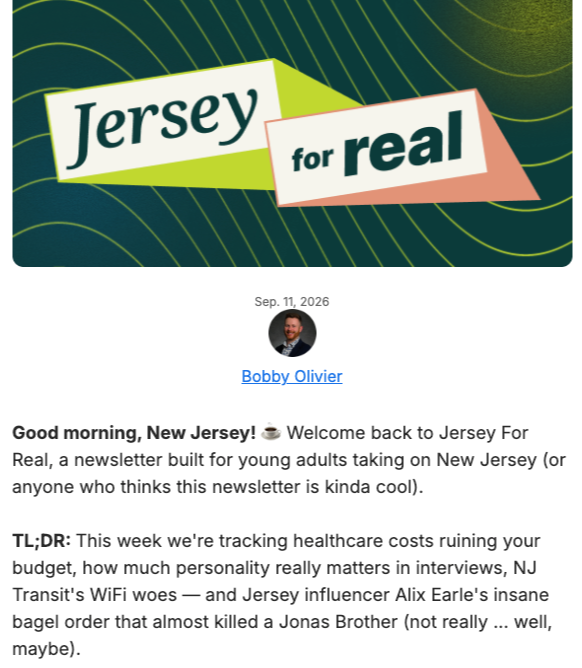
As a local news network operating across 10 markets, Advance Local explored a range of ideas while prototyping, including a proposal to create a social platform. This wasn’t feasible. Instead, the team opted to create a product that could easily reach next-gen audiences and keep them abreast of the news of the week: a dedicated newsletter.
A newsletter is a classic way to foster regular engagement. In the Next Gen News 2 report’s modes of engagement framework, it taps into perhaps the most intentional and committed mode: subscribe. But a product like this demands a production cadence.
To test the newsletter, the Advance Local team first had to design a workflow for surfacing relevant stories from a content-management system that spans newsrooms in multiple states. The team found a place for AI in that workflow.
In the resulting story curation system for the newsletter, every day at midnight, an AI agent crawls through the new stories published in the CMS that day. It flags those most likely to be relevant to their audience. At the end of each week, the AI agent creates a draft of the newsletter, including subsections and the stories selected throughout the week. From there, an editor reviews the compiled draft and writes an intro before sending it out.
This workflow was built with AI in mind to expedite the process of curating the newsletter weekly, especially as a test bed for reaching a specific audience. AI improves the feasibility of this workflow, making it possible to scale the initiative to multiple audiences, while freeing up time for the newsletter editor to focus on other tasks.
“Where AI will hopefully help is minimizing the lift to go to different distribution channels. What we’re doing right now is a certain editorial lens in email newsletter format. Can we take that same editorial lens and get it ready for the [next format]?” said David Cohn, Senior Director, Generative AI Innovation for Content and the Newsroom at Advance Local.

What this means for your newsroom
Knowing when and how to have your team use AI to solve your problem is the key. Have honest conversations with your team about the realities of how you can feasibly add AI to a solution and where AI will sit: Is it to be used internally, to improve efficiency, or will an AI application be consumer-facing?
Consider the problems you’re facing today, which problems are worth your time solving in the here and now, and whether those problems are worth solving with AI. Honest conversations about these challenges can prevent your team from unnecessarily going down a path that can cost both resources and your audiences’ trust.

Follow the Sprint

NEXT