

Black Ballad’s three-step test for turning audience data into commercial opportunities
A case study from Black Ballad on narrowing scope, building trust, and designing repeatable audience data products.
“Data, not content, is the fundamental asset of an audience-driven company.”
I proclaimed this confidently in several presentations between 2021 and 2023 as I detailed Black Ballad’s success in capturing consented audience data (also known as zero-party data).
Black Ballad – a lifestyle media brand and community for Black women in Britain and beyond – had just finished two national audience research projects. Six thousand Black women from across the U.K. contributed roughly 45 data points on their attitudes toward motherhood, beauty, politics, health, money and careers.
The resulting dataset provided insights that couldn’t be found anywhere else. It sparked numerous editorial projects, including a takeover of HuffPost UK’s parenting and life verticals, and left us optimistic that we were charting a path distinct from most digital media companies, one that wasn’t reliant on pageviews, search and social. We assumed that if data unlocked new editorial opportunities, commercial opportunities would follow.
That is not what happened.
We secured a handful of sponsorship deals and consulting projects, but most conversations with potential clients ended in disappointment. Three clear themes emerged from the feedback we received from the companies who turned us down:
Broad, but shallow: Our research provided a sweeping snapshot of Black British women’s lives. While this was editorially interesting, it was less useful to potential clients, who wanted deeper insights into specific categories.
Difficult to see commercial value: We shared findings like “89% of our respondents felt Black motherhood was underrepresented in media and advertising,” but potential partners were more interested in how women felt about their brand – and how they compared to their competitors.
Just a moment in time: Our data was grounded in 2020. We couldn’t show how attitudes changed over time or contextualize them.
Our takeaway: capturing data wasn’t enough. To build a business based on audience insights, we needed to narrow the scope of our data collection, be more disciplined when evaluating commercial viability, and design products that could support repeatable data collection, not just one-off efforts.
Making those changes led us to The Black Ballad Beauty Council, a community of 400+ Black women who participate in ongoing research projects, product reviews, and testing to improve the beauty experience for Black women. The beauty council generates revenue for Black Ballad through commercial partnerships with beauty brands seeking deeper traction with Black female consumers.
Three questions helped us move from two surveys of more than 2,500 people in 2020 that barely covered costs to a 400-person community today that generates revenue every month:
Step 1: Is this topic commercially viable?
Step 2: Is the data useful on both sides of the market?
Step 3: Can this product generate data over time?
Today we put every idea through this three-question test.
Step 1: Is this topic commercially viable?
First, you have to evaluate the commercial viability of each topic you’re considering. This is different from the editorial question of “Is this worth covering?” Editorial value asks whether a topic is important, timely, or under-covered; commercial viability asks whether there are companies willing to invest in reaching the people who care about that topic.
We learned from our revenue miss with the motherhood survey that “motherhood” was too broad. Had we zeroed in on a particular aspect, such as Black women’s experiences within the National Health Service (NHS) or new beauty routines as mothers, we would have been more likely to find commercial viability. That’s the level of specificity around which consumer products and marketing are designed.
To assess commercial viability of a topic, we ask ourselves three questions:
Are we defining the topic narrowly enough? Focused topics tend to have clearer commercial opportunities than broad ones.
Is there existing spend in this area? We look for areas where brands are already investing to reach Black women.
Will this topic sustain interest over time? Commercial viability depends on audience members sharing data repeatedly, not just once. That requires building around consistent needs, not news-driven ones.
Early in the ideation process that led to the beauty council, we assessed 10 lifestyle topics against these questions, including fashion, home, and consumer electronics. Only three topics passed this test, including beauty.
We initially thought dating and relationships would be a good candidate. Dating was the most read topic on Black Ballad in 2025 and the volume of shares and comments on social platforms gave us confidence that we could capture enough data points over time. However, various dating apps were actually decreasing their spending on reaching Black audiences, meaning it didn’t pass our commercial viability test.
The most commercially viable topics will not always align with your core editorial priorities. That doesn’t mean you need to abandon those priorities – it just means you need to be intentional about how you allocate resources. And sometimes commercial viability emerges not by changing the topic, but by narrowing what you put in the package. For example, notes from planning and zoning meetings may not be useful for audience-facing products, but they might be the foundation for a valuable product for developers.
Step 2: Is this data useful on both sides of the market?
If Step 1 is about sizing up the market opportunity, Step 2 is about determining whether there is a two-sided market for data in that area. In other words, once we have confirmed that a topic is commercially viable, we ask whether there is a way to capture data that audience members will want to share and partners will pay to access.
Our goal in asking this question is to design the conditions for product–market fit. Can we create a product that clearly serves the two primary stakeholders in an insights business: our audience and the entities seeking to learn about them?
First, we brainstorm potential research products such as surveys, polls, reviews, and other formats that could collect audience data. We then evaluate each idea against two criteria:
Audience usefulness: What would motivate audience members to participate? The more a request for data can tap into utility or purpose, the more likely audiences are willing to engage – and to encourage others to do the same.
Participation doesn’t have to be financially motivated. One lesson from our 2020 motherhood research is that when the reason for participating is meaningful (in that case, learning more about Black women's maternal health), people are more willing to respond and to share the opportunity with others. Similarly, the Black Ballad Beauty Council promises to use the data members share to build better beauty experiences for Black women.
Commercial usefulness: Does the data help brands do their job better? Ultimately, clients pay for insights that help them make money, save money, or understand their customers better.
Commercial enterprises are not the only potential customers of an insights product. As we whittled down our commercially viable topics, we also considered whether the data could be useful to academics, governments, or other institutions whose primary goal is not profit, but understanding or public service.
This intersection of audience usefulness and commercial usefulness is what we mean by a two-sided market—and it’s where the strongest opportunities for building an insights business emerge.
This is the step at which our decision to focus on beauty was solidified. While beauty was not necessarily the most lucrative of the three topics that made it to this stage, it was the only one for which we were confident there was a two-sided market.
We zeroed in on beauty reviews specifically after hearing in our research that finding the right beauty products is expensive and time-consuming. A lack of honest, trusted beauty reviews from Black women forces consumers into trial and error, a clear sign of an unmet need – and high audience usefulness.
Black women spend up to six times more on beauty than the average consumer, and their best referrers remain friends, family and trusted communities, not generic influencers. That combination made beauty reviews both highly valuable to audiences and commercially useful to brands.
We saw an opportunity to productize that trusted referral network and sell access to it.
Step 3: Can this product generate data over time?
With a commercially viable, useful data collection idea in mind, the third step is to assess repeatability—whether the product idea can support ongoing data collection over time.
We see repeatability as essential for three reasons:
Our clients need to understand behavior over time, not just capture a one-off snapshot.
Repeated collection helps us determine how many data points we need for commercial viability and what it will cost to gather them.
A strong dataset depends on ongoing audience participation, which requires trust and familiarity that can only be built over time.
With beauty reviews we started simply, partnering with beauty brands to offer free beauty boxes to audience members in exchange for detailed product feedback. Over 18 months, we ran campaigns with seven brands across hair, skincare, and makeup, making small adjustments each time to the number of products, sample size, packaging, survey depth, and review requirements.

These experiments helped us identify which products were most enticing to participants and which types of feedback were most valuable to brand partners.
Those learnings informed the next iteration of the product: the Black Ballad Beauty Council.
The beauty council expanded upon the beauty box idea by incorporating structured product testing, focus groups, and exclusive beauty review events. To ensure the value of council members’ feedback extended beyond the council itself—and to build broader awareness—we developed a companion content series, BB Approved, featuring review videos from council members. Brand partners, in turn, gained the ability to benchmark their campaign results against those of other brands.
Data acquisition: from a trust tax to a competitive growth advantage
At the core of this work is collecting data from people for the purpose of selling it – and that can easily become an extractive practice if the data collection isn’t also helping you deliver greater value to your audience.
Black Ballad tries to align everything we do with the values and needs of the Black women we serve. While this alignment might seem more natural with editorial or commercial partnerships, it is arguably even more important when it comes to data. Widespread skepticism of “companies that use our data” means trust has to be earned and maintained.
We return to four questions whenever we design a research or data capture project to ensure we’re delivering greater value:
What do participants get out of it? There needs to be a true value exchange. The Black Ballad Beauty Council offers participants free products and experiences in exchange for their opinions and reviews. When participants receive something they genuinely value, they can make an informed personal decision about whether participation is worth it for them.
Can the data help us build a better product for our audience? We want to be the first and best customer of any data we collect so we ask whether the insights will help us create better media, events, or brand-fueled partnerships for Black women. This doesn’t require personalization at the level you see in Spotify Wrapped. What matters is that audience preferences meaningfully influence what we build – and that participants can see and understand that impact. That visibility helps turn data collection into a two-way relationship.
Does the data help us understand something important about our community? Research projects that surface undercovered but meaningful insights about Black women are generally received positively, sometimes even enthusiastically. Both the motherhood project, which explored gaps in understanding Black maternal health, and the beauty council, which seeks to improve beauty products for Black women, were designed to create value beyond individual participants. That broader purpose consistently led to higher-quality data and stronger engagement. Participants actively advocated for the research by sharing surveys, creating user-generated content, and inviting others to take part.
Will Black women benefit if other organizations use this data? Put differently: is there value in responsibly sharing this data with others? Most consumers assume the worst when it comes to data sharing. But when we can clearly identify which organizations or industries would better serve Black women if they acted on these insights, data sharing becomes easier to justify. Framing the downstream impact helps audiences see how their participation can contribute to wider change.
The more these questions can be answered positively from the audience’s perspective, the more likely they are to approve of, participate in, and share a project with others. Together, they reinforce two core principles: audience centricity and transparency about why data is being collected.
This transforms data acquisition, often perceived as extractive, into an opportunity for building trust. Demonstrating alignment builds trust. Trust increases participation and advocacy. That participation generates more evidence of alignment.
As discussed in Step 3, repeatability depends as much on trust and familiarity as it does on product design.
This trust and transparency flywheel has been key to capturing data sustainably. Even as some users churn and stop participating with our surveys and data capture activities, they are replaced by others who join based on peer recommendation. One of our most important success metrics is how many new participants were acquired directly from an existing participant sharing the opportunity with their network.
Transforming data acquisition from a trust tax into a competitive advantage is emblematic of the shift many media businesses must make as they evolve into brands. At the heart of that shift is customer centricity in every part of the business, from editorial to sales to product to data. This is when data stops being a liability and becomes an asset.
Key takeaways
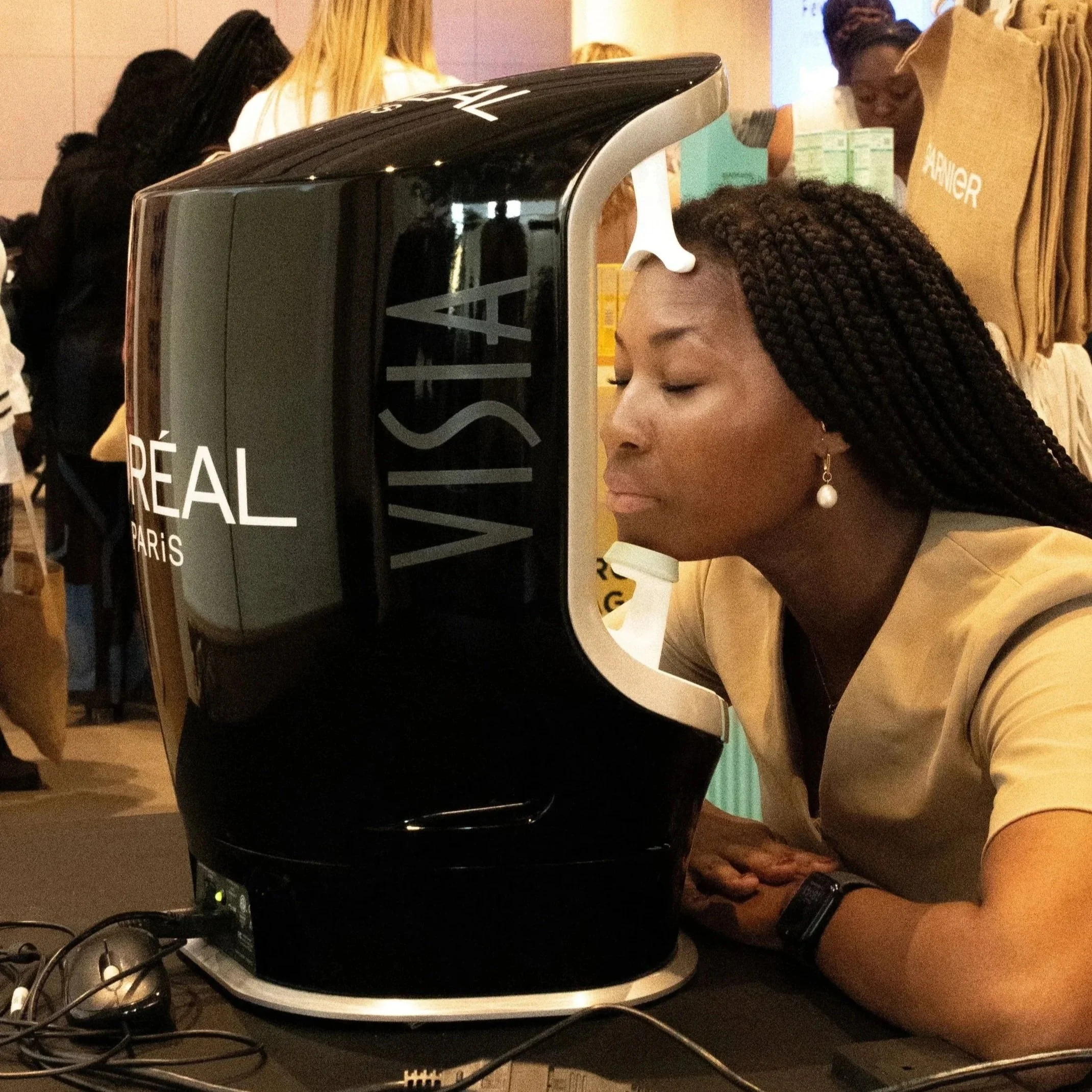
The Black Ballad Beauty Council proved to be an inflection point for the business. It helped us build a reputation for authentic, practical beauty coverage for Black women. We secured 14 deals across insights, media and events in 2025, leading to a 150% increase in revenue for beauty compared to the previous year.
The data we capture through the beauty council has created a halo effect, in part because it directly addresses the things we first got wrong.
Deep, narrow insight: With every campaign, we unlock a more detailed understanding of which products work for Black women and why.
Clear commercial value: One client saw a fivefold increase in product usage within the Black Ballad community over 12 months after incorporating beauty council members’ feedback on the product. We are now entering our third year working together.
Insights that evolve over time, as enabled by repeatability: Each campaign includes a consistent set of core questions, allowing us to compare responses and track changes over time.
Black Ballad is still firmly in the “walk” era of our data and business transformation and we’re still working out some of the inevitable growing pains, but a few lessons might be useful if you’re considering a similar approach:
Be expansive when considering different verticals. Don’t limit yourself to areas that have been historically popular or profitable. Neither is a reliable proxy for success in a strategy built on consented audience data.
Don’t be put off by low readership. In a data-driven, consent-based strategy, 100 willing participants in a highly commercially viable market can be far more valuable than 10,000 participants in a vertical that won’t monetize. Ask anyone working in B2B media how much they earn per lead. It’s about reaching the right audience – and converting them – not the largest audience.
Start testing commercial viability early. As soon as you start capturing data, share it with potential partners. Early feedback can help you refine what you collect and may even lead to small pilot deals that offset initial costs.
Iterate on your product. You won’t arrive at a fully formed product on day one. Start small, test for product-market fit and commercial viability with as little investment as possible, and treat audience engagement as both validation and momentum.
Attributes that once defined the media business—pageviews and audience acquisition via search and social—are declining in real time. Building direct audience relationships is necessary, but it must be for more than just distributing content or sending personalized calls to action.
What we learned through building the Black Ballad Beauty Council is that trust-based, direct audience relationships become a true commercial asset when they are used to collect insight that is useful—to the people sharing it and to the organizations seeking to understand them.