Stepping back from a working prototype to validate the core problem. Building a member-funded newsletter that combines AI document monitoring with editorial curation. Using survey data to map audience needs into ‘modes’ that can help convert visitors into invested members.
These are just some examples from the NPMC’s latest cohort that reflect the work of news product leaders today. As technology, audience behavior and business models are evolving at a rapid pace, their role isn't just to ship products. It’s to approach transformation strategically by bridging audience needs with business sustainability.
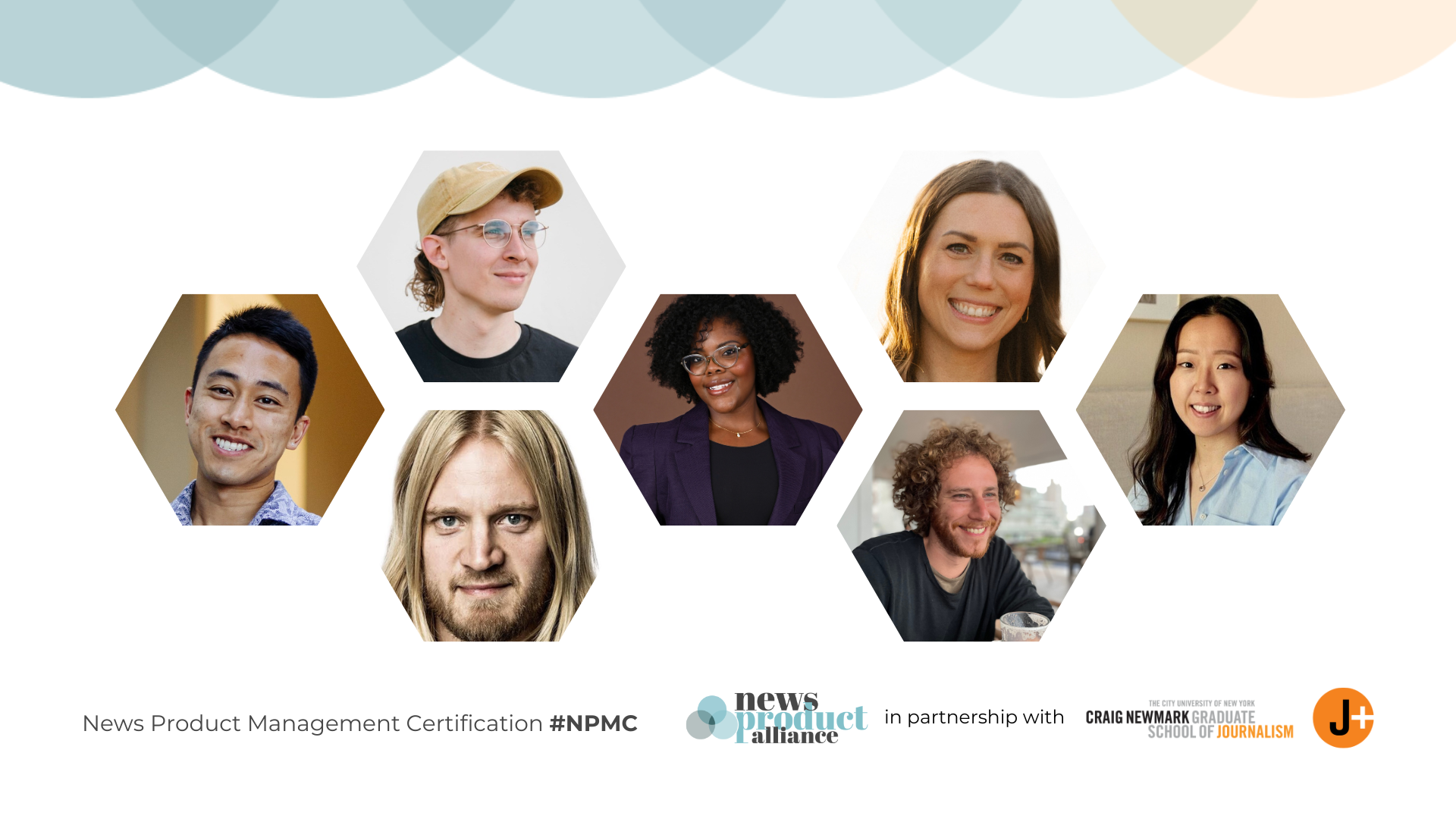
At the end of every News Product Management Certification cohort, participants present a capstone project built around a real challenge or opportunity in their own news organization. The program’s fifth cohort just wrapped, and participants’ projects span newsletters, membership, civic engagement products, newsroom tools and infrastructure, and more. Together, they provide a snapshot of the priorities and challenges shaping news product work today.
Here are a few examples:

Kyle had a working prototype for a multiple recipe planning tool for NYT Cooking. He decided to take a step back from what was already built, in order to validate the core problem (‘how can we bring users into the NYT Cooking app for moments outside of cooking a recipe?’) from scratch by conducting user interviews and sentiment analysis. The insights from this process confirmed that underserved meal-planning workflows are a real opportunity worth deeper exploration.

Martin launched "08", a member-funded weekly newsletter focused on Stockholm civic life, combining AI document monitoring with editorial curation and a founding-member community model, already live with 1,100+ people on the waitlist. Throughout the program, Martin also refined the membership-based business model, conducted a competitive analysis and developed a go-to-market strategy.

Lauren developed a three-part webinar series on wealth-building for Boston communities of color. The series, providing expert-led financial guidance on topics like first-time homebuying and estate planning, was grounded in audience insights from community listening sessions with 150 Greater Boston residents. Lauren also used the Lean Canvas to develop a product strategy centered on identifying monetization methods, reaching target audiences, and growing newsletter subscribers.

Nicolás designed a civic engagement product ecosystem for Spanish-Speaking Latinos in North Carolina with two distinct user journeys – one for eligible voters and one for the 450,000+ non-citizen Latino adults in the state who influence household civic decisions. The ecosystem is made up of nine interconnected products, including election guides, explainers, interactive tools and a WhatsApp community. He also developed an impact measurement framework to make the case to philanthropic funders.

Minhee developed a national supporter program that converts trusting PBS News visitors into invested members. Using audience survey data, she mapped PBS News visitors into four audience modes based on the users’ needs, plotted the user journey, and targeted the "filter" and "steward" audience modes through tiered access and a detailed set of launch and retention key results (KRs).

Kai developed a collaborative creation product strategy for independent journalists. Combining user interviews with quantitative audience overlap analysis, he identified four core challenges facing independent media collaborations. Grounded in research showing consumers will pay significantly more for bundled media than for individual titles, the team at Steady shipped a live prototype: a "Bundle Pass" subscription combining three aligned news creators, now testing whether bundling drives audience growth and overlap.

Danielle developed DataNation, a centralized editorial data warehouse and API layer that will be the foundation for a semi-automated, AI-assisted hyper-local data and utility product. The product is designed to deliver personally relevant, one-stop local information directly to readers. The vision is to use this infrastructure to grow Hearst Newspapers’ geographic footprint, targeting high-intent local news consumers who are already accustomed to getting their news online.
The NPMC now has a network of more than 150 alumni across 35 countries, and one thing the program consistently shows is that, despite working in very different types of news organizations, participants are often trying to solve the same underlying challenges. Bringing those perspectives together allows them to compare approaches, learn from one another, and develop better solutions.
The News Product Management Certification gives practitioners the frameworks and skills to develop and execute a product strategy, validate their ideas, and lead product work within their organizations. Unlike general product management programs, it's built specifically for the news industry—where editorial values, audience trust, business sustainability, and technology all shape product decisions—and is taught by senior practitioners working across media and technology companies.
Interested in joining a future cohort? Sign up to receive updates when applications open: